

Blog
ETP For Textile Industries in Mumbai




ETP For Textile Industries in Mumbai – Advanced Textile Effluent Treatment Solutions by FaydekaBiz
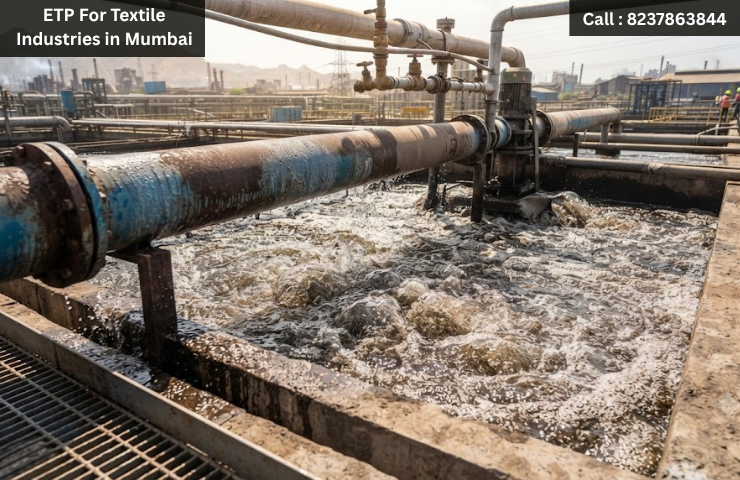
The textile industry is one of Mumbai’s most significant manufacturing sectors, contributing to India’s economy while consuming large volumes of water during dyeing, bleaching, washing, printing, and finishing processes. As a result, industries generate wastewater containing dyes, chemicals, suspended solids, oils, heavy metals, and high levels of Biological Oxygen Demand (BOD) and Chemical Oxygen Demand (COD). Installing an ETP For Textile Industries in Mumbai has therefore become an operational necessity rather than just a regulatory requirement.
At FaydekaBiz, we have over 10 years of experience in designing, manufacturing, installing, and maintaining advanced Effluent Treatment Plants (ETPs) for textile industries across Mumbai and Maharashtra. Our customized wastewater treatment solutions help textile manufacturers comply with Maharashtra Pollution Control Board (MPCB) and Central Pollution Control Board (CPCB) regulations while reducing operational costs, conserving water, and promoting sustainable manufacturing.
About FaydekaBiz
FaydekaBiz is a trusted provider of industrial wastewater treatment solutions with more than a decade of expertise in environmental engineering. We specialize in designing and implementing innovative treatment systems that enable industries to minimize environmental impact while maximizing operational efficiency.
Our expertise extends beyond supplying equipment. We provide complete consultation, engineering, fabrication, installation, automation, commissioning, operation support, Annual Maintenance Contracts (AMC), and system upgrades.
Our expertise includes:
- Effluent Treatment Plants (ETP)
- Sewage Treatment Plants (STP)
- Wastewater Treatment Plants (WWTP)
- Industrial RO Plants
- Zero Liquid Discharge (ZLD) Systems
- Ultrafiltration Plants
- Water Recycling Systems
- Sludge Dewatering Solutions
- Industrial Water Treatment Automation
- Annual Maintenance Contracts (AMC)
Our mission is to help industries achieve environmental compliance while improving water efficiency and reducing operating costs through advanced treatment technologies.
Major Challenges Faced by Textile Industries
Treating textile wastewater is one of the most complex industrial wastewater treatment challenges because wastewater characteristics change frequently depending on production.
Some common issues include:
High Colour Concentration
Textile dyes are highly resistant to natural degradation. Even a small amount of untreated dye can contaminate large volumes of water.
High COD and BOD
Organic compounds significantly increase oxygen demand, affecting aquatic ecosystems if discharged untreated.
Variable Wastewater Quality
Different fabrics and dyeing processes generate wastewater with varying pH, color intensity, and chemical composition.
High TDS Levels
Salts used during dyeing contribute to elevated TDS levels, making wastewater treatment more challenging.
Chemical Residues
Processing chemicals, surfactants, bleaching agents, and finishing chemicals require advanced treatment technologies.
Understanding Textile Industry Wastewater
The textile manufacturing process requires large quantities of water for different production stages. Every stage generates wastewater with unique contaminants that require specialized treatment.
Major textile processes include:
- Desizing
- Scouring
- Bleaching
- Mercerizing
- Dyeing
- Printing
- Washing
- Finishing
Each process releases pollutants that cannot be discharged directly into municipal drainage systems or natural water bodies.
Common Pollutants Found in Textile Effluent
Textile wastewater generally contains:
- Synthetic dyes
- Reactive dyes
- Organic chemicals
- Detergents
- Surfactants
- Acids
- Alkalis
- Salts
- Heavy metals
- Suspended solids
- Oil & grease
- High COD
- High BOD
- High Total Dissolved Solids (TDS)
- Toxic color compounds
Without proper treatment, these pollutants can severely affect aquatic ecosystems, groundwater quality, and public health.
Why Textile Industries Need an ETP
Modern textile industries cannot operate efficiently without an effective wastewater treatment system. Government regulations are becoming increasingly stringent, making environmental compliance a business necessity.
An advanced ETP For Textile Industries in Mumbai helps industries:
- Meet MPCB discharge standards
- Comply with CPCB regulations
- Prevent environmental pollution
- Reduce freshwater consumption
- Recycle treated water
- Lower operational expenses
- Improve sustainability performance
- Enhance brand reputation
- Avoid environmental penalties
- Support ESG (Environmental, Social, and Governance) initiatives
Investing in a high-performance ETP is not only about compliance it is also a strategic investment in long-term operational efficiency and corporate responsibility.
Our ETP Solutions for Textile Industries
FaydekaBiz offers complete wastewater treatment solutions designed specifically for textile manufacturing facilities.
Primary Treatment
This stage typically includes:
- Bar Screening
- Collection Tank
- Equalization Tank
- Oil & Grease Removal
- pH Correction
- Flash Mixing
- Coagulation
- Flocculation
- Primary Clarifier
Secondary Treatment
Depending on wastewater characteristics, we implement:
- Pressure Sand Filter
- Activated Carbon Filter
- Ultrafiltration (UF)
- Reverse Osmosis (RO)
- UV Disinfection
- Ozonation
- Advanced Oxidation Processes (AOP)
Tertiary Treatment
Our tertiary treatment solutions include:
- Activated Sludge Process (ASP)
- Moving Bed Biofilm Reactor (MBBR)
- Sequential Batch Reactor (SBR)
- Membrane Bioreactor (MBR)
- Aeration Systems
These systems remove residual color, dissolved solids, pathogens, and trace contaminants, making treated water suitable for reuse in various industrial processes.
Get In Touch
Key Features of Our Textile ETP Systems
Our wastewater treatment plants are designed for durability, efficiency, and ease of operation.
Features include:
- Modular plant design
- Compact footprint
- Energy-efficient equipment
- PLC and SCADA automation
- Corrosion-resistant construction
- Low maintenance requirements
- High contaminant removal efficiency
- Easy integration with existing infrastructure
- Remote monitoring capabilities
- Water recycling compatibility
These features ensure consistent performance while reducing operational complexity and lifecycle costs.
Benefits of Installing an ETP for Textile Industries
Implementing a well-designed ETP provides both environmental and business advantages.
Some key benefits include:
- Reduced environmental impact
- Compliance with pollution control norms
- Lower freshwater consumption
- Improved water recycling
- Reduced wastewater disposal costs
- Better operational efficiency
- Enhanced corporate sustainability
- Improved workplace safety
- Increased investor confidence
- Stronger environmental reputation
Environmental Responsibility and Sustainability
Modern textile industries are increasingly expected to adopt environmentally responsible practices. Installing an advanced ETP For Textile Industries in Mumbai demonstrates a company’s commitment to sustainable manufacturing and responsible water management.
FaydekaBiz designs treatment systems that help industries:
- Reduce freshwater consumption
- Recycle treated water
- Minimize environmental pollution
- Lower carbon footprint
- Reduce sludge generation
- Improve resource efficiency
- Support ESG goals
- Meet sustainability reporting requirements
Water conservation is no longer just an environmental initiative it has become a strategic business advantage that reduces costs and enhances corporate reputation.
Experience, Expertise, Authoritativeness, Trustworthiness (E-E-A-T)
Experience
With over 10 years of experience, FaydekaBiz has successfully delivered customized ETP solutions for textile industries, helping businesses achieve efficient wastewater treatment and environmental compliance.
Expertise
Our team of environmental engineers designs advanced ETP For Textile Industries in Mumbai using proven technologies that maximize treatment efficiency while minimizing operational costs.
Authoritativeness
FaydekaBiz is recognized for providing reliable, industry-specific wastewater treatment solutions that meet MPCB and CPCB standards for textile manufacturing facilities.
Trustworthiness
We are committed to delivering high-quality systems, transparent project execution, dependable after-sales support, and long-term partnerships built on performance and customer satisfaction.
Frequently Asked Questions (FAQ)
Q1. Why is an ETP important for textile industries?
Ans: An ETP treats textile wastewater by removing dyes, chemicals, suspended solids, and pollutants before safe discharge or reuse.
Q2. Can treated wastewater be reused?
Ans: Yes, treated water can be reused for utilities such as cooling, washing, gardening, and selected industrial processes, reducing freshwater consumption.
Q3. Does FaydekaBiz provide turnkey ETP solutions?
Ans: Yes, we offer complete turnkey solutions including design, manufacturing, installation, commissioning, automation, and AMC services.
Q4. Which industries can benefit from your ETP solutions?
Ans: Our ETP systems are suitable for textile dyeing, fabric processing, garment manufacturing, textile printing, yarn dyeing, and other industrial sectors.
Q5. How does FaydekaBiz ensure regulatory compliance?
Ans: Our treatment plants are designed to help industries meet MPCB, CPCB, and other applicable environmental discharge standards.
Contact Faydekabiz today.
Get in touch today for customized ETP solutions that improve wastewater management, ensure compliance, and support sustainable industrial growth.
Address: D Wing. Flat No. 03, Ground Floor, Philips C.H.S.L, Philips Complex near Furniture Point, M.G Road, Papdi, Vasai West, Vasai-Virar, Maharashtra 401207
Phone: +91 8237863844
Email: faydeka@gmail.com
Website: www.faydekabiz.com
Conclusion
As environmental regulations become more stringent and water conservation gains importance, investing in an advanced ETP For Textile Industries in Mumbai is essential for sustainable and responsible textile manufacturing. An efficient effluent treatment system not only ensures compliance but also reduces operational costs, supports water recycling, and strengthens your company’s environmental commitment.
With over a decade of experience, FaydekaBiz delivers customized, turnkey wastewater treatment solutions tailored to the unique needs of textile industries. From design and installation to commissioning and long-term maintenance, our expert team is dedicated to helping your business achieve reliable performance, regulatory compliance, and sustainable growth.
For inquiries and business assistance, contact:
Mobile: 8237863844
Website: www.faydekabiz.com
Related Posts

ETP for Oil and Gas Industries in Mumbai
-
Posted by
Faydeka

ETP For Pharmaceutical Industries in Mumbai
-
Posted by

ETP for Food Processing Industries in Mumbai
-
Posted by

